
Section 1: Lepers at the Keyboard
Excommunicant
Listen to Section 1: Lepers at the Keyboard, Excommunicant
I am the ghost still listed on the org chart,
a name that glows in Teams with a green dot
no one believes is truly green.
My body became a referendum
the day the masks came off
and the invitations stopped.
They said the pandemic was over
the way priests once declared a heretic healed
if she would only walk into the fire
to prove the flames were imaginary.
I stayed behind the screen,
hermit by medical decree,
while the office laughed in unmuted corridors
and planned drinks I could not breathe near.
“They’re not that sick,” the chorus sang,
a hymn of eye-rolls and half-laughter.
“Must be nice,” they muttered,
as if my lungs traded places with a vacation fund.
My specialist’s letters lost in a manager folder
like relics no one bows to anymore.
I listen to the world through glass
the way medieval lepers watched processions
from the wrong side of the city wall.
Friends drive past, rather than visiting with a mask.
Community is a potluck I can only smell
through someone else’s Instagram story.
My absence calcifies into rumour:
difficult, dramatic, gone.
Haiku for the exiled
Listen to Haiku for the exiled
empty swivel chair
my laugh arrives as text bubbles
no one leans toward
Final couplet, whispered from home
Listen to Final couplet, whispered from home
One day the story will call you brave
for surviving what you forced me to leave.
Bedding Out
They call it fraud when they catch me
upright for an hour,
sitting on a park bench feeding birds,
or (shock) drinking tea in daylight
with a friend who still remembers my face.
They never saw the spoons counted at dawn:
twelve on a good day,
six on most,
sometimes only three
and one of them already spent
on the act of getting out of bed.
They do not see the arithmetic:
sixteen hours horizontal
to buy one vertical day
that will cost me the rest of the week’s entire balance.
They do not see the rehearsal:
meds timed to the minute,
salt tablets swallowed like communion,
compression stockings rolled on
like armour for a war no one admits is happening.
They do not see the cost,
the way the bench feels like concrete
after twenty minutes,
how the tea cup trembles
when the dysautonomia realises
I have stood up too long.
They only see the contradiction:
the ghost who sometimes appears
in colour, in sunlight,
and decide the sickness was a performance
I can switch off when convenient.
Let them look closer.
This is not recovery.
This is spoon economics
in a world that pretends energy is infinite.
Every minute upright
is a spoon bent permanently out of shape.
Every smile in public
is a spoon I will not get back.
Call it Bedding Out—
the way activists once lay in public squares
the private arithmetic of disability
made briefly, defiantly public
so they cannot keep pretending
the bed is a lie
and the spoons are imaginary.
I do it smaller:
an outdoor café table,
a patch of grass,
a single hour of sky on my skin
before the debt is called in.
Watch me sit.
Watch me stand.
Watch me pay for it later
when the lights are off
and no one is taking notes.
This is not cheating the system.
This is the system
working exactly as they designed it:
barely enough life
to keep the body technically breathing
and never enough
to stop them calling it fraud.
About the artwork
Listen to the artist statement for Presenteeism Kills
This garth of poems are forensic reports from inside a body declared surplus the day the masks came off. They document the compound grief of the immunocompromised and chronically ill: grief for the dead we could not bury, the living we cannot touch, and the life we were told to abandon. Colleagues call it accommodation envy; I call it scapegoating. The world calls it “back to normal”; I call it managed extinction. Yet within the red-lined map of what was taken, these works also trace the fierce, deliberate art of living one’s best life when the world insists you have no right to any life at all. Survival becomes choreography: breath counted, risk weighed, joy scavenged in the margins and fiercely guarded. Presence is measured not in seats occupied but in poems written, connections sustained, and mornings claimed on the body’s own terms. This is not a plea for pity. It is evidence of refusal, and of beauty built from the scraps they left us.
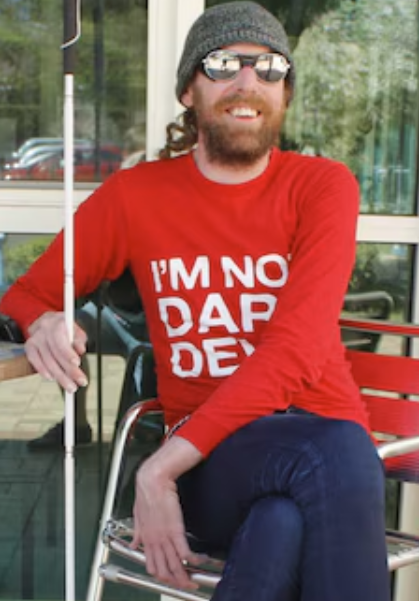
About the artist - Dr James Newton
A leading disability rights advocate for accessible arts and ICT procurement for people with disability, serving on numerous state and national advisory councils and earning the coveted Human Rights Award, James is also an accomplished artist, designer, and fashionista passionate in his belief that art can heal and build connections.
He founded the Access Arts Link Studio, an arts-based programme in Launceston for all ages, particularly engaging vulnerable populations.
He categorically denies swinging from rooftops with a billyclub, though.